
Operational visibility
LogiSea workflows become visible in one place; teams, managers and field users work from the same data.
LogiSea is not just a set of screens or forms. When designed correctly, it creates a measurable operating model between LogiSea, integration and operations. Most Idea approaches the solution with business goals, user roles, data flows, security requirements and long-term maintenance in the same frame. At the beginning of the project, we do not only discuss design or technology choices; we clarify which operation should move faster, which report should improve decisions and which integration should reduce manual work.
In enterprise environments, software value appears where it touches daily work. Screens, dashboards, notifications and admin panels within a LogiSea project are therefore designed around real user behavior. Sales teams, operations, finance, management, field users or customers can work in the same system with different permissions. The data each role can see, the actions each role can perform and the approval steps each role owns are planned separately. This makes the system both controlled and practical.
Many growing companies slow down because of scattered spreadsheets, disconnected CRM records, manual approval chains, delayed reports and departments that cannot see each other’s work. A LogiSea project reduces this fragmentation by simplifying data entry points, automating repetitive work and giving decision makers current information. Quotes, orders, stock, customers, payments, shipments, appointments, production, content or tasks can be modeled in the same architecture. The important question is why each data point is stored and which decision it supports.
Most Idea separates the solution into manageable phases instead of forcing every idea into a heavy first release. The first phase focuses on core modules that create the fastest business value. The second phase can add integrations, advanced reports, role-based permissions and automation flows. The third phase may introduce AI-supported analysis, prediction, recommendation engines or document processing when the data foundation is ready. This approach makes budget, risk and delivery timing easier to control.
When choosing the technical architecture for LogiSea, we consider not only today’s traffic but also future data volume and operational complexity. Database design, API layer, caching, file management, error tracking, logging, permissions and backup strategy are planned together. Users should not wait during peak hours, reports should be generated within reasonable time, integrations should work predictably and the system should be observable.
On the security side, role-based access, strong authentication practices, session management, input validation, secure file handling, rate limiting, audit logs and responsible storage of sensitive data are essential. In systems that process customer, finance, healthcare, production, logistics or commerce data, security is not a layer added later; it is a starting point of the architecture. Most Idea clarifies which user can access which data and which actions must be tracked during the analysis stage.
Modern operations do not happen only on desktop. A manager may need a quick report, a field user may need to complete a task, a customer may need to create a request or an operations team may need to approve something immediately. For LogiSea, responsive web, PWA, native mobile or hybrid approaches are evaluated according to the usage scenario. The goal is not to show everything on every device, but to help every device complete the right task quickly.
Interface design uses clear navigation, understandable form flows, early validation and concise microcopy. The shorter the learning curve, the faster internal adoption becomes. UI/UX is therefore treated not only as visual quality but also as an operational efficiency topic. For complex products, UI/UX design can be planned as a separate workstream.
For web-facing products and platforms, technical SEO, clean URL structure, metadata, schema, fast loading, image optimization and content management create a strong advantage. Pages within a LogiSea scope are prepared not only to go live, but also to grow over time. Editable CMS fields, SEO titles, OG images, FAQ blocks and internal linking allow marketing teams to move without waiting for technical support.
Visual assets should use WebP format, defined width and height, lazy loading, responsive sources and layout-stable containers. For product, service or industry pages, images should avoid a generic stock feeling and support the idea of a real dashboard, workflow, team operation or data flow. This makes the page more credible and strengthens conversion-focused storytelling.
APIs and integrations in a LogiSea project are not treated as technical connections only. The right integration reduces repeated data entry, prevents manual mistakes and improves reporting reliability. ERP, CRM, accounting, payment, SMS, email, shipping, marketplace, call center or custom systems are evaluated with data ownership, error handling, retry logic and security boundaries. More complex cases can be planned under a dedicated system integrations phase.
AI is recommended only when it creates clear business value. Demand classification, document reading, anomaly detection, customer segmentation, route or stock recommendations, content assistance and prediction scenarios are evaluated according to data quality. If the data foundation is not ready, we first build digitalization and reporting maturity; then AI solutions can introduce more advanced automation.
Most Idea starts with the business problem. During the scope discussion, goals, user types, existing systems, KPIs and technical risks are clarified. Then the information architecture, data model, screen flows, integration list and phase plan are prepared. This model works for service pages, product landing pages and industry solution pages. The goal is not a page that only looks good, but a system that remains usable, maintainable and measurable over time.
The first step for your LogiSea project is to evaluate the current operation and the expected outcome together. A demo, technical discovery or scope workshop can clarify which modules are required in the first phase, which integrations are critical and which metrics will prove success. This makes the project easier to budget, expectations easier to align and post-launch development more sustainable.
The structure is designed around business outcomes, technical sustainability and measurable operational value.
LogiSea workflows become visible in one place; teams, managers and field users work from the same data.
ERP, CRM, accounting, payment, email, SMS, shipping, marketplace and third-party API connections are planned from the beginning.
Role-based permissions, audit trails, data validation and secure session design are treated as core requirements for enterprise use.
The technical foundation is prepared for traffic peaks, growing data volume and future module expansion.
Manager, team and customer screens are designed for a consistent experience across desktop, tablet and mobile devices.
Panels, content, users, notifications and reports are structured to reduce dependency on technical teams.
Each project is planned with the systems it must work with, the users it will serve and the decisions it must support.
We first map the existing flow, roles, data sources and bottlenecks; then build a phased and practical delivery plan.
Clear but powerful panels are designed for management teams to track sales, operations, cost, performance and usage data.
Existing systems are respected; secure API layers, data synchronization and automation flows are added where needed.
AI scenarios such as demand prediction, classification, recommendation, document reading and anomaly detection are evaluated by business value.
Interface language, task flows and error messages are designed around users' daily pace, reducing training load.
After the first release, the logisea scope can expand in a controlled way with new modules, reports and integrations.
Visual references are positioned as product and workflow proof instead of decorative stock imagery.
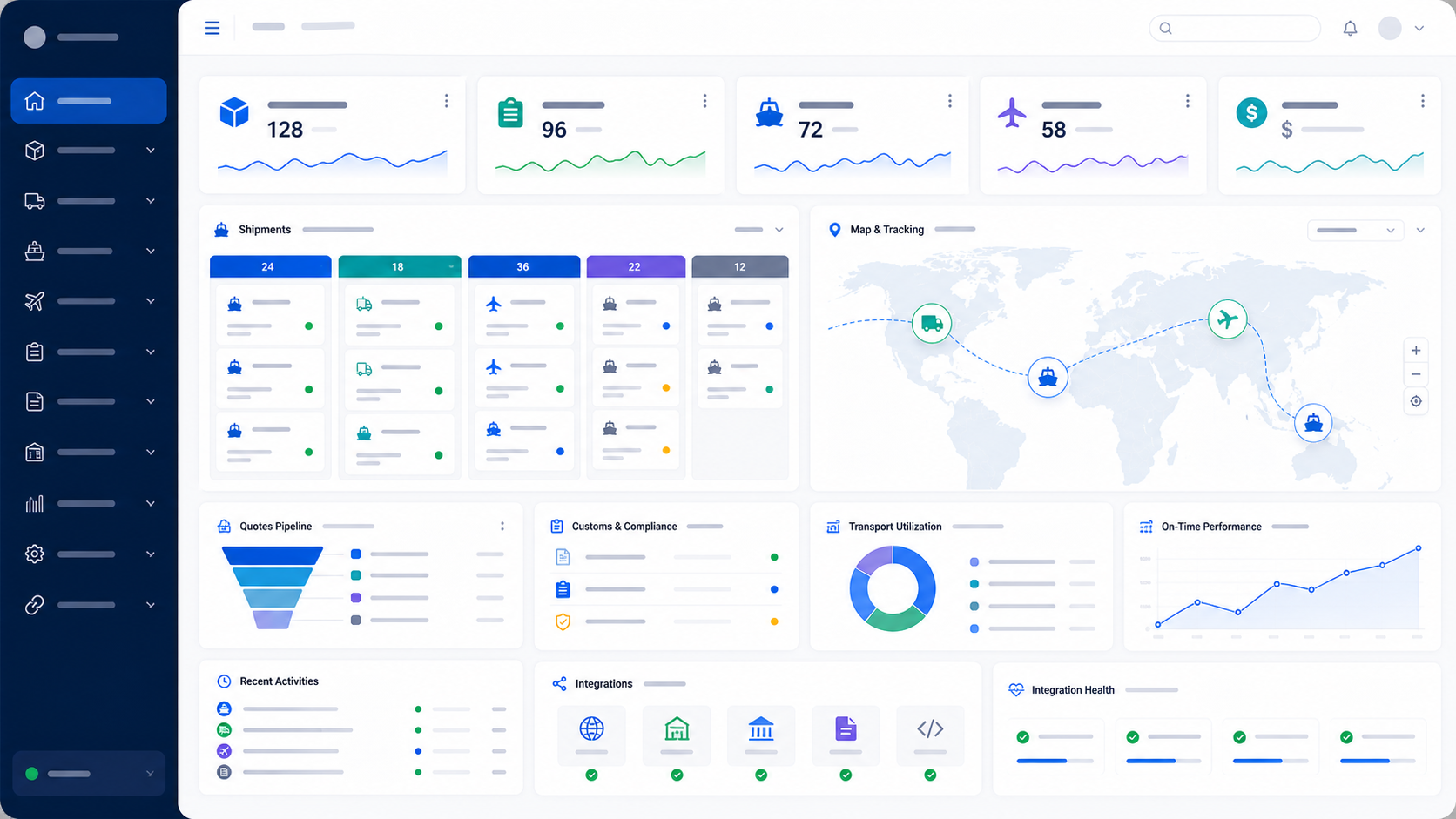
A dashboard, admin panel and interface composition that supports the LogiSea workflow.
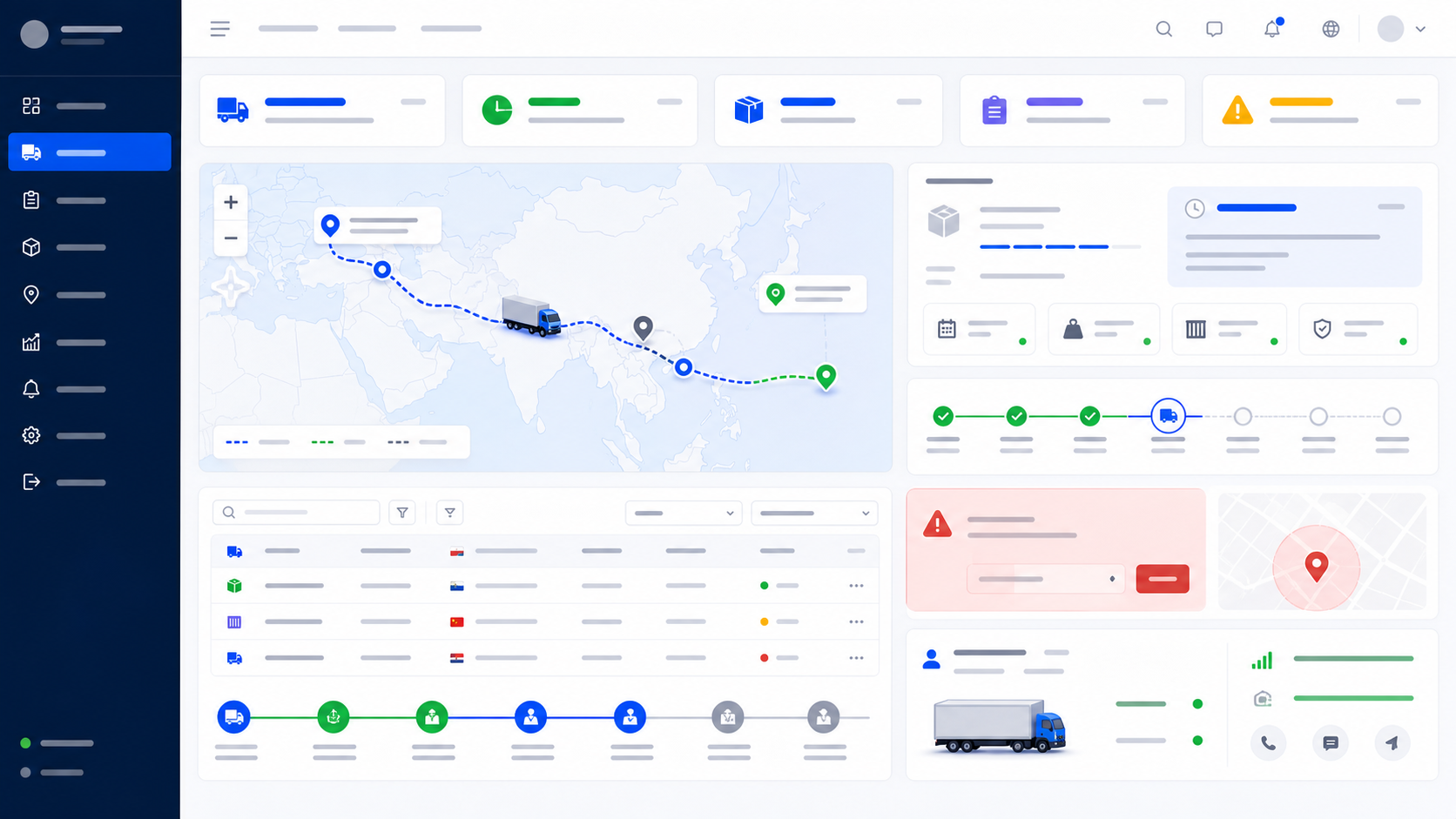
It visually supports the flows, integrations and decision screens users follow in the LogiSea scope.
Common questions before planning the project scope.
Share your goals and current workflow. We will clarify scope, phases, integrations and the first delivery plan.
We use cookies and similar technologies for analytics and personalized ads. See our Privacy Notice for details.